Cem Mert Dalli
— One l away from Dalí, but my canvases are mostly satellite images.
PhD Student in Political Science
Aarhus University
Causal inference, spatial analysis & Earth Observation for conflict and development research.
About Me
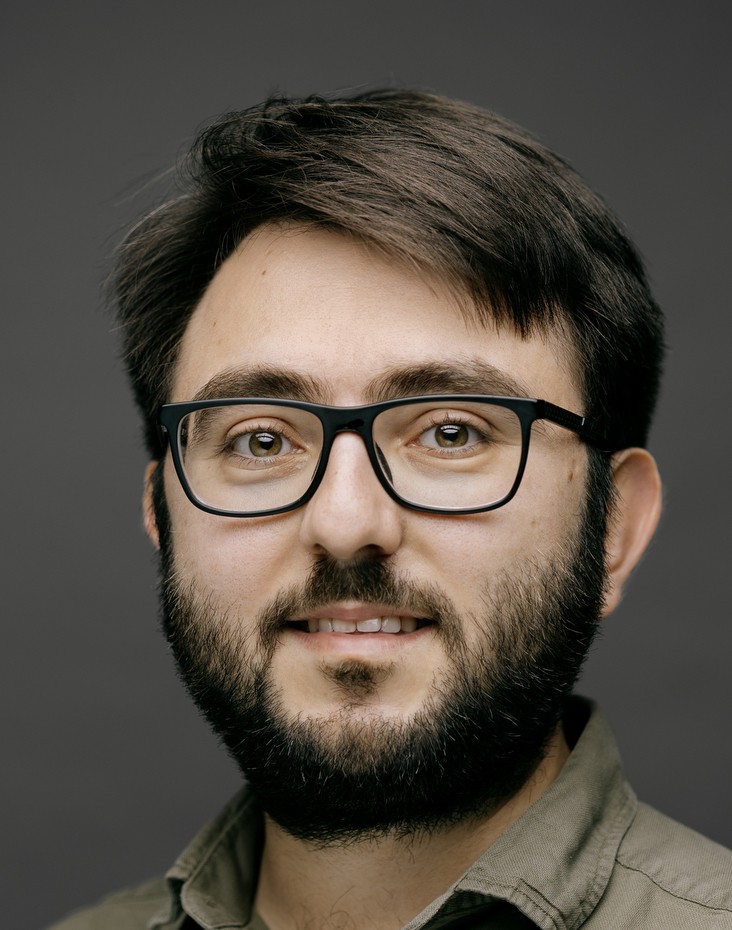
I am a PhD student in the Department of Political Science at Aarhus University and a member of the AI & Global Development Lab. As a quantitative social scientist, I am keen on bringing new computational and AI-assisted methods to address complex problems across the social sciences.
My research focuses on developing causal inference methods for observational settings where interventions are spatio-temporally connected, where treatment intensity and timing evolve across space and effects propagate through spillovers and interference. In my dissertation, I mainly work on combining stochastic intervention frameworks with Bayesian spatial models to estimate these effects. A core strand of my work integrates Earth Observation and computer vision into causal design, using satellite imagery and representation learning to measure local conditions and address high-dimensional spatial confounding.
Substantively, I focus on the political economy of development and the long-run consequences of armed conflict. I also maintain a strong interest in historical political development, adopting a longue durée perspective through my work with the Political Leaders through Time (PLT) project, where I study state formation and political leadership.
Before starting my PhD, I worked as a Data Manager at the Quality of Government (QoG) Institute, University of Gothenburg, where I remain on leave. My work there focused on the curation and maintenance of major cross-national governance datasets.
// education
PhD in Political Science
Aarhus University
MSc in Applied Data Science
University of Gothenburg
MSc in Political Science
Lund University · Welfare Policies & Management
BA in Political Science, IR & History (Double Major)
Boğaziçi University · magna cum laude
// experience
Data Manager
Quality of Government (QoG) Institute · University of Gothenburg
Research Assistant
Lund University / University of Oslo / Yale University / MIT
Research Areas
My research sits at the intersection of causal inference methodology and substantive questions in political economy. I develop frameworks to estimate treatment effects in spatio-temporal settings, leveraging Earth Observation embeddings and spatial modeling to address high-dimensional confounding.
Causal Inference Methodology
Developing identification strategies for connected environments and spatial networks. I focus on stochastic interventions and interference frameworks to disentangle causal effects within complex dependencies.
Spatial Analysis & EO
Integrating Earth Observation embeddings and computer vision into causal designs. I use high-dimensional visual data to proxy local development and control for unobserved spatial confounding.
Computational Methods & NLP
Mapping latent political spaces through high-dimensional text. I employ Large Language Models to scale ideological positions and analyze the strategic dimensions of parliamentary speech.
Political Economy of Development
Deciphering the political logic of distribution and favoritism. I analyze foreign aid's role in poverty eradication and interrogate public procurement as a strategic mechanism of redistribution.
Conflict & Historical Development
Investigating the long-term socioeconomic outcomes of exposure to armed conflict. I examine how these legacies interact with historical mechanics of state formation and political leadership over the longue durée.
Seeing Change from Space
Satellite imagery reveals what statistics alone cannot — the spatial footprint of conflict, development, and environmental change.
Harmonized Sentinel-2 MSI (Level-2A) imagery tracks the systematic leveling of the built environment. High-resolution multispectral data captures the near-total transition of high-density residential fabric into a landscape of debris, marking the catastrophic destruction of civilian infrastructure.
The desiccation of the Aral Sea represents a definitive case of state-driven anthropogenic disaster. Satellite observations track the complete disappearance of the eastern lobe between 2000 and 2014, marking a catastrophic shift in the regional hydropolitical landscape.
VIIRS data shows an 80% collapse in lights across Aleppo and the Euphrates corridor between 2012 and 2016. This spatial record serves as a direct metric of state fragmentation, mass displacement, and the catastrophic breakdown of civil infrastructure.
The transformation of the Cerrado highlights the spatial logic of industrial agribusiness. Native savanna is systematically replaced by export-oriented soy monocultures, driven by global commodity chain demands and the commodification of land use.
My approach uses EO data and vision models to strengthen inferences from observational settings: as outcome measures where ground-truth is sparse, as instruments or for matching in causal designs, and as fine-grained temporal observations that tabular data simply cannot provide. When combined with methods like stochastic interventions and spatial models, satellite imagery lets us ask — and answer — causal questions at a resolution that was impossible a decade ago.
Publications
Estimating Local Welfare Effects of Chinese Development Finance in Africa
Utilizing causal machine learning to quantify the sub-national impacts of Chinese development finance on local welfare outcomes across Africa.
Political Competition and Public Procurement: Subnational Evidence from Municipal and State-Level Contracts in Turkey
Interrogating the political logic of favoritism and distributive politics through high-frequency procurement data.
The Institutionalization of States
Exploring cycles of governance across the life span of polities, using leadership tenure to analyze power concentration and institutionalization.
Curriculum Vitae
$ cat positions.log

2025–present  PhD Student, Political Science      Aarhus University
2020–2025     Data Manager, QoG Institute         Univ. of Gothenburg
2017–2020     Research Assistant                  Lund / Oslo / Yale / MIT

$ cat education.log

PhD   Political Science        (WIP)    Aarhus University
MSc   Applied Data Science     '26      Univ. of Gothenburg
MSc   Political Science        '19      Lund University
BA    Pol. Sci / IR / History  '17      Boğaziçi University

$ echo $TOOLS

Python · R · Stata · Stan · PyTorch · SQL · Git · QGIS

$ _Get in Touch
I always value connecting with colleagues and researchers who share similar interests. Whether you're looking to discuss potential collaborations, share research insights, or simply have a question about my work, I welcome the opportunity to exchange ideas.
cem@ps.au.dkDepartment of Political Science
Aarhus University
Bartholins Allé 7, Building 1332, Room 121
8000 Aarhus C, Denmark